Direkt zum Hauptbereich

Jong chak yeok

JONG CHAK YEOK
Bis ans Ende de Welt

Regie Kwon Min-pyo, Seo Hansol
Republik Korea 2020

Koreanisch
UT Englisch • 79 Minuten

Produktion Park Ki-yong
Buch Kwon Min-pyo, Seo Hansol
Kamera Park Jae-man
Montage Kwon Min-pyo, Seo Hansol
mit Seol Si-yeon, Bae Yeon-woo, Park So-jung, Han Song-hee

Mo, 14.06.2021, 17:30 Uhr Neue Bühne Hasenheide

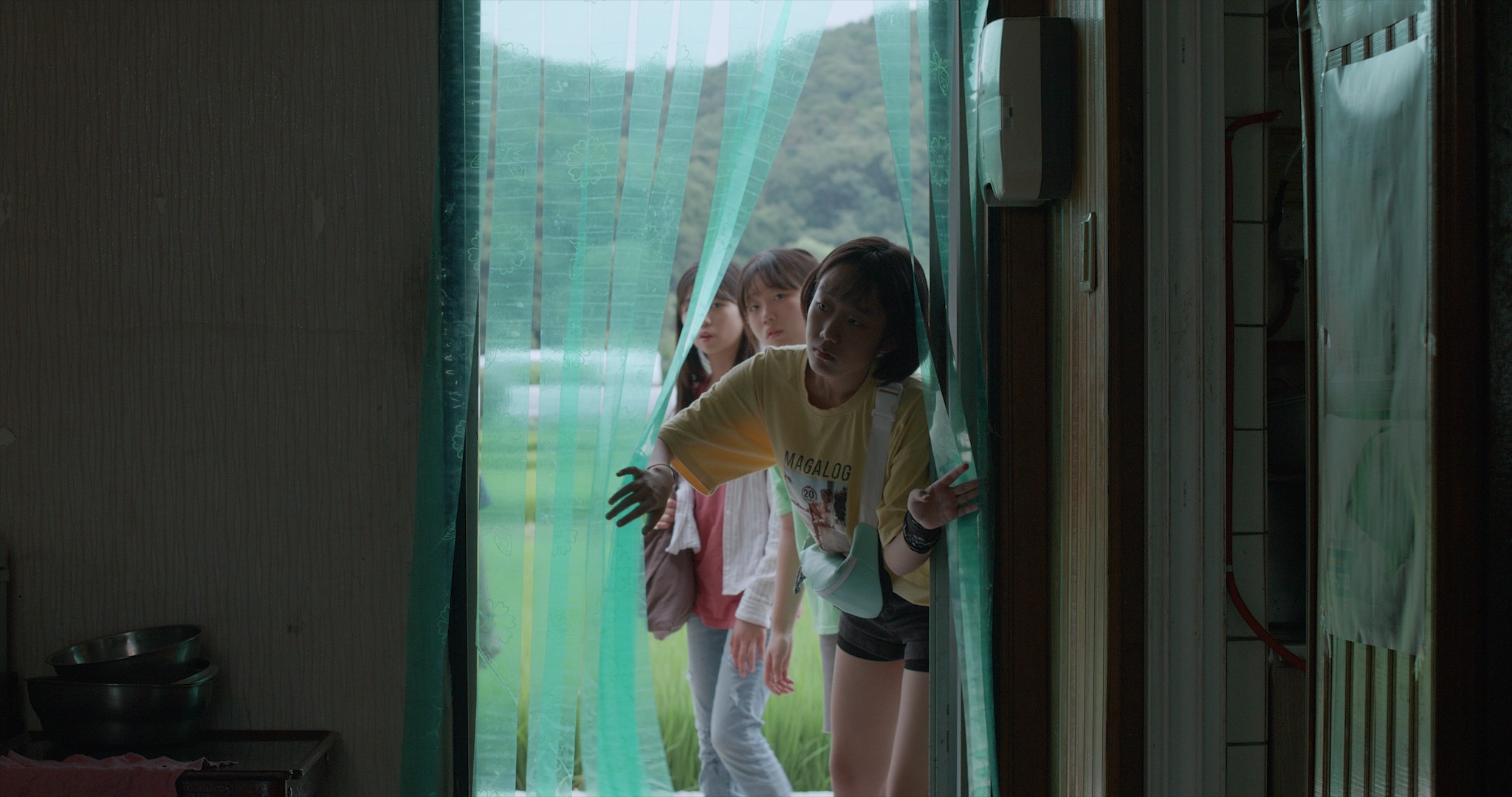
Ausgerüstet mit analogen Einwegkameras machen sich vier Mädchen auf den Weg zum Ende der Welt. Was abenteuerlich klingt, führt den Fotoclub zunächst an die Endstation der U-Bahnlinie 1 am südlichen Stadtrand von Seoul. Dort angekommen scheint es den jungen Expeditionsteilnehmerinnen angesichts der wohl niemals enden wollenden Bahnlinien jedoch, als würde sich ihre Welt durch ihren Ausflug nur weiter ausdehnen. Angetrieben von Hartnäckigkeit und vom großen Freiheitsgefühl der Sommerferien streunen sie durch die Landschaft. Lachend im Regen, auf einer Landstraße posierend und vertieft in Gespräche über Dinge, die ihnen begegnen, und Dinge, die sie bewegen. Am Ende bleiben ein Gefühl und ein Bild: von einem langen Sommertag und einer lauen Sommernacht, draußen, mit Freundinnen.

Armed with old-fashioned disposable cameras, four girls set off to find the end of the world. It sounds like an adventure, but when the young photography club members arrive at the final station of Line 1 of the Seoul Metropolitan Subway, on the southern outskirts of the city, it turns out the railway tracks just keep on going indefinitely – as if coming this far has merely made their world even bigger. Undeterred, inspired by the boundless freedom of the summer holidays, they continue their expedition on foot: laughing in the rain, posing on a deserted country road, lost in conversations about the things they come across and the things that move them. In the end, what remains is a feeling, and a picture – of a long summer‘s day and night on the outskirts, with friends.

Kommentare

Beliebte Posts aus diesem Blog

“Once you leave you can never go back to who you were as a child” - An Interview with The Director Venice Atienza of “Last Days At Sea”

Wednesday morning I was able to talk to the director Venice Atienza whose film “Last Days at Sea” is screening at this year’s Berlinale. Since she is currently based in the Philippines we arranged a Zoom meeting that would take into account the 6 hours of time difference. An inspiring talk emerged that started with her special way of filming and lead to a discussion of vulnerability that is needed for these films. fGR: Would you like to introduce yourself shortly? My name is Venice Atienza. I initially studied cinema, but before that I actually wanted to be a chef. One day, when I was 16 or 17 years old, I was watching a Korean drama and I asked my mother: “What job makes people feel things?” and she replied by asking me “Why don’t you become a film maker?”. After applying for the second time I finally got into film school. I really always knew I wanted to make documentaries but did not know how. A friend of mine then told me about the project Doc Nomads which I got accepted at. ...

Five minutes with Fred Baillif

an interview with the director of „La Mif“ The cinema is slowly filling up and the joyful voices of the crowd are giving me a feeling I haven't felt for a long time in the last months of lockdown. Finally it is possible again to celebrate a Berlinale film together. The film team of La Mif is welcomed with loud applause when they arrive at the cinema. Everyone of the crew - the director Fred Baillif, a few of the actresses and family and friends - is smiling and radiates pure joy as they’re walking up to the photo wall. I wait until they’re done with all photos and take the chance to sit down with Fred Baillif for a few minutes before the film starts. What interests me the most about this quite special topic is why Baillif chose it to portray it in one of his films. Fred Baillif: „Because I used to work as a social worker and studied it when I was younger. In the beginning i wanted to tell a story about sex abuse and then I thought the best place to talk about such a subject wou...

Autismus – mehr als nur ein Klischee!

Ein Mensch, der sehr in sich gekehrt wirkt, sich nicht anfassen lässt und kaum mit der Außenwelt kommunizieren kann. Das ist das Bild, das viele Menschen von Autist*innen haben. Aber Autismus ist deutlich vielfältiger. Deshalb wird heute meist der Begriff Autismus-Spektrum-Störung verwendet. Denn Autismus erstreckt sich von geistiger Behinderung und kaum ausgeprägter Sprache bis hin zu Hochbegabung mit voll entwickelter Sprache. Ein Hauptmerkmal sind Auffälligkeiten in der sozialen Interaktion und Kommunikation. Aber wie äußert sich die genau? Für Andere wirkt es häufig als ob Autist*innen in ihrer eignen Welt leben: zurückgezogen, schweigsam, wenig Kontaktverhalten. Aber es gibt auch Autist*innen, die distanzlos und eigenartig in ihrem Kontaktverhalten wirken. So reden einige Autist*innen sehr viel und weitschweifig über ihre Interessen und achten dabei wenig auf die Angemessenheit oder Wirkung ihres Verhaltens. Denn ein weiteres Kennzeichen der Autismus-Spektrum-Störung ist ein einge...